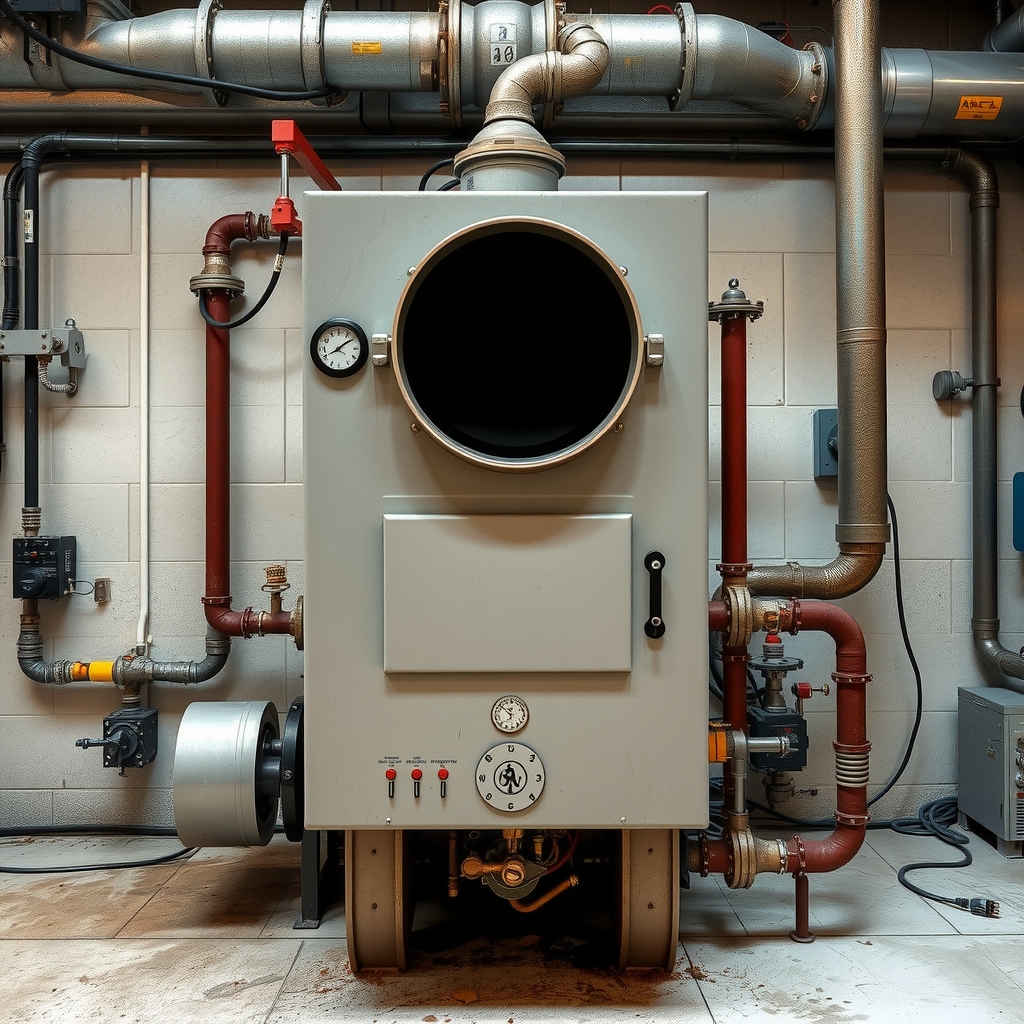
Xử lý khí thải lò hơi represents a critical environmental challenge for many businesses. We understand the urgent need for effective solutions to protect our planet and comply with evolving regulations. Môi Trường Đông Nam Bộ provides innovative, sustainable systems tailored to your specific needs.
Understanding Boiler Exhaust Gas
Industrial boilers are vital for producing steam, which powers various machinery. They consume solid fuels (wood, coal, rice husks), liquid fuels (DO, FO oil), or gases (LPG). The chosen fuel directly impacts the composition of the exhaust gas.
What is an Industrial Boiler?
An industrial boiler produces steam for industrial processes. It heats water using fuel. Fuel types include wood, coal, rice husks, DO oil, FO oil, or gas. Today, wood, coal, and FO oil are common choices. Exhaust characteristics depend on the fuel.
Xem thêm: Hệ thống Xử lý Nước thải Xi Mạ: Giải Pháp Toàn Diện & Hiệu Quả
Applications of Boilers Today
Boilers have diverse applications:
- Generating steam for steam locomotives and power plant turbines.
- Laundry services in garment factories.
- Steaming, drying, pasteurizing, sterilizing in food and beverage production (confectionery, breweries, dairies).
- Drying wood, foam, fishmeal for animal feed; steaming rattan and bamboo products.
- Alcohol distillation systems.
- Industrial cooking and catering.
- Heating water for four-season swimming pools, hot water networks for resorts, hotels, schools, and rehabilitation centers.
Specific Characteristics of Boiler Exhaust by Fuel Type
Exhaust gas composition varies significantly with the fuel used.
Wood-Fired Boiler Exhaust Characteristics
Wood-fired boiler exhaust reaches temperatures of 120-150°C. It contains combustion products such as CO2, CO, N2, some unburnt wood, excess oxygen, and fly ash. The composition changes with wood type. Gas volume generated is relatively stable. For calculations, VT20 = 4.23 m3/kg helps; 1 kg of wood creates 4.23 m3 of exhaust gas at 200°C. Ash and dust comprise unburnt matter and impurities, typically 1% of dry wood weight. Dust concentration ranges from 200-500 mg/m3.
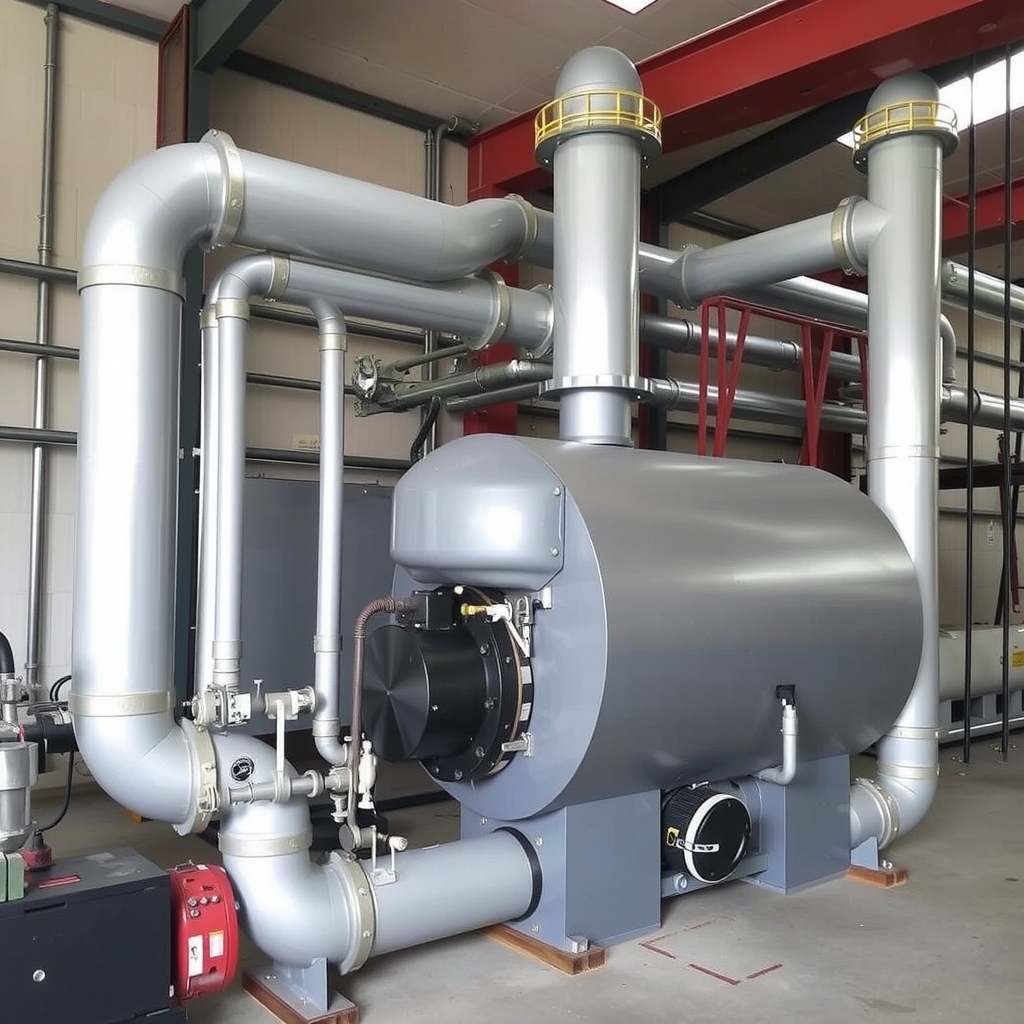
Xem thêm: Tháp Hấp Phụ Than Hoạt Tính: Giải Pháp Xử Lý Khí Thải Hiệu Quả, Bền Vững
Coal-Fired Boiler Exhaust Characteristics
Coal-fired boiler exhaust mainly contains smoke, ash, dust, CO2, CO, SO2, SO3, and NOx. These substances form from coal components reacting with oxygen during combustion. With sulfur content around 0.5% in coal, SO2 concentrations reach approximately 1,333 mg/m3. Exhaust gas volume depends on coal type; Anthracite coal from Quảng Ninh produces V020 ≈ 7.5 m3/kg per 1 kg of coal.
FO Oil-Fired Boiler Exhaust Characteristics
FO oil boiler exhaust typically comprises CO2, CO, SO2, SO3, and water vapor. It also includes small amounts of ash and fine ash particles mixed with unburnt oil, appearing as soot. FO oil pollution load is consistent. Air required for complete combustion of 1 kg of FO oil is V020 = 10.6 m3/kg. Exhaust gas from 1 kg of FO oil combustion is Vc20 ≈ 11.5 m3/kg ≈ 13.8 kg of exhaust gas/kg of oil.
Harms of Emissions from Boiler Fuel Combustion
Operating boilers with solid, liquid, or gas fuels releases high concentrations of CO, SO2, NOx, and dust. These levels frequently exceed QCVN 19:2009/BTNMT. Failure to treat these emissions severely impacts the environment and public health.
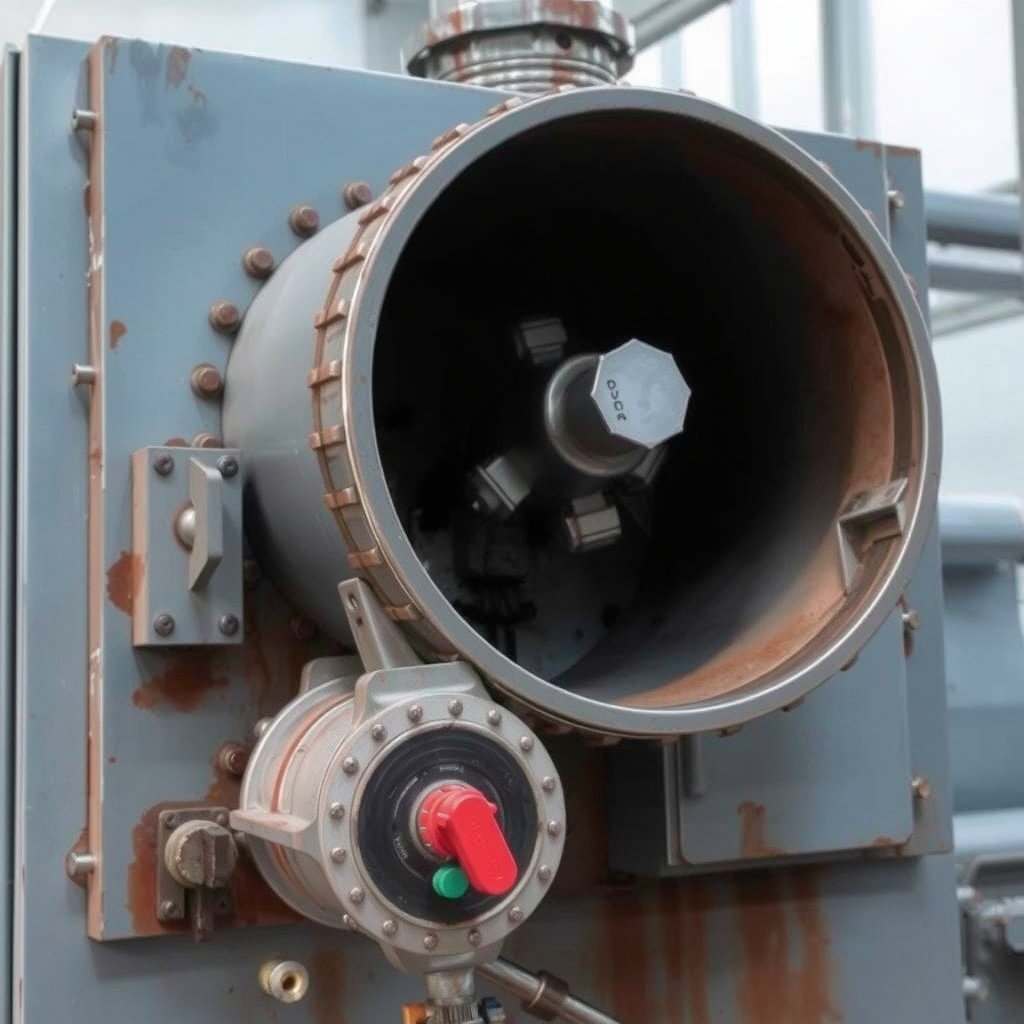
Xem thêm: Hướng Dẫn Hoạt Động Bảo Vệ Môi Trường Cho Học Sinh: Gieo Mầm Ý Thức Xanh
- SO2 is an irritant, highly water-soluble. It reacts readily with human and animal respiratory systems, causing metabolic disorders.
- CO is extremely dangerous. Exposure to high CO levels leads to oxygen deprivation in the blood, nervous system damage, and even death.
- NOx harms lungs. Hours of exposure to 15-20 ppm NO2 concentrations presents risks to lungs, heart, and liver.
- Dust damages the respiratory tract, causing conditions such as rhinitis, pharyngitis, and bronchitis.
Boiler Exhaust Gas Treatment Technology
Our Treatment Technology
Môi Trường Đông Nam Bộ offers proven xử lý khí thải lò hơi solutions.
Process Description
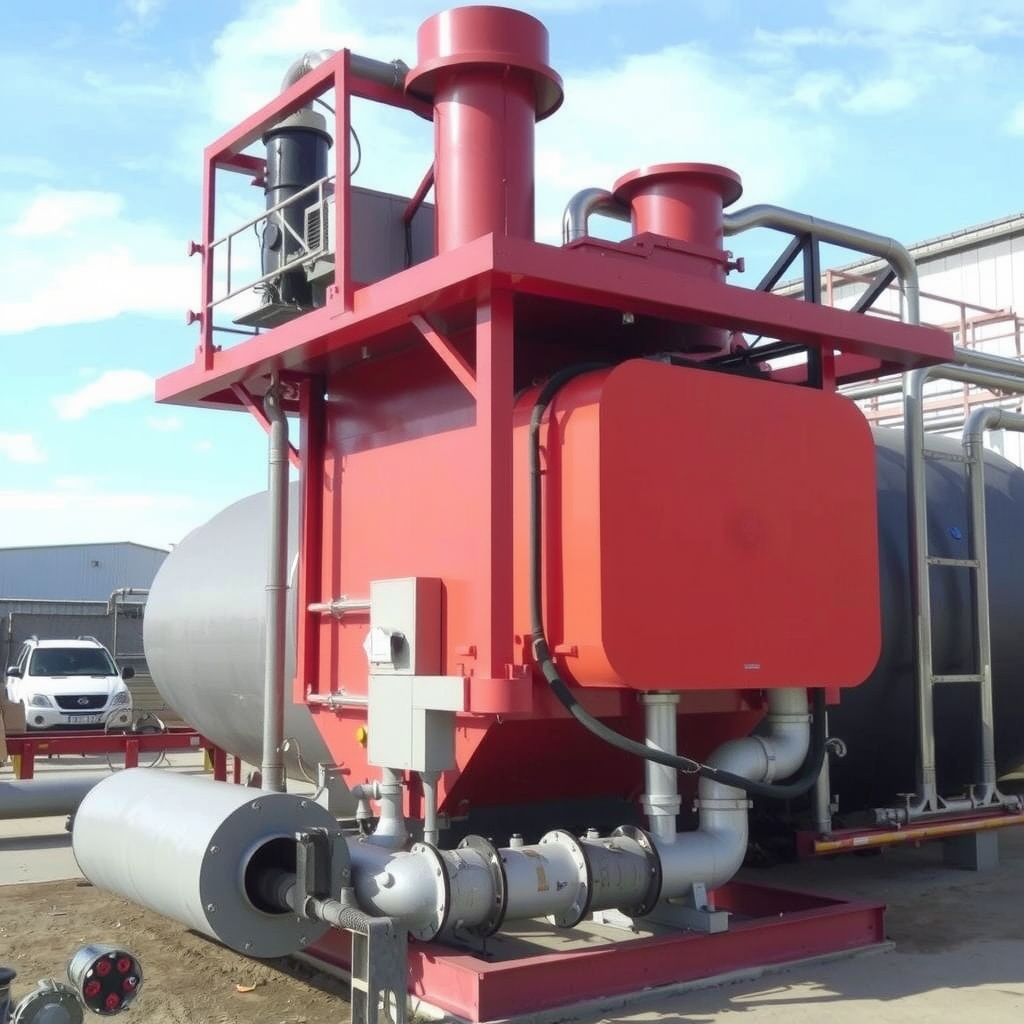
Exhaust gas from the FO oil-fired boiler travels through a hood to a heat exchanger. This reduces the gas temperature. Water serves as a cost-effective heat transfer medium; the heated water finds reuse for other purposes.
After cooling, the gas flows to a fabric bag filter. Dust particles strike the bag filter walls and fall into a dust collection hopper.
The dust-free gas then proceeds to an absorption tower. Here, an absorbing solution removes SO2. Gas flows upward, and the absorbing solution flows downward, reacting. Pollutants stay in the solution, and clean gas exits through the stack.
Treatment plans adapt to the specific fuel and emissions.
- Boiler exhaust treatment for DO & FO oil, wood, coal, kilns, foundries.
- Industrial dust treatment: wood dust, paint dust, tobacco dust, cement dust.
- Odor treatment for rubber processing plants, pig/chicken farms, slaughterhouses, landfills.
- Ventilation for workshops, machine rooms, stairwells.
- Upgrading and improving exhaust gas treatment systems, dust filtration systems.
Boiler Exhaust Emission Regulations
Our systems ensure compliance with national standards.
Maximum Permissible Concentrations in Industrial Exhaust Gas
Refer to QCVN 19:2009/BTNMT – QUY CHUẨN KHÍ THẢI CÔNG NGHIỆP ĐỐI VỚI BỤI VÀ CÁC CHẤT VÔ CƠ for detailed regulations.
Criteria for Selecting Boiler Exhaust Gas Treatment Technology
System Development Criteria
Economic growth drives industrial expansion, requiring corresponding advancements in environmental protection and exhaust gas treatment. Môi Trường Đông Nam Bộ sets high standards for technology selection. We ensure optimal treatment effectiveness and cost efficiency.
- Optimized Design and Space Usage: Modern technology allows for compact treatment systems while maintaining optimal effectiveness.
- Improved Treatment Effectiveness: Our methods enhance effectiveness by 10-30% over older technologies.
- Aesthetic Appeal: We prioritize designs that offer a clean, professional appearance.
- Cost Optimization: We focus on minimizing investment, operational, and treatment costs.
- Scalability: Our systems support easy upgrades, expansion, or capacity adjustments, minimizing demolition of existing valuable structures.
Material and Equipment Selection for Exhaust Treatment Systems
Môi Trường Đông Nam Bộ sources materials and equipment from primary suppliers. This guarantees favorable pricing and high discounts.
- Experienced Team: Our team of masters, engineers, and technicians possesses vast experience. This ensures swift design and construction, with rigorous oversight. It also reduces costs from waste or work delays.
- Skilled Subcontractors: We collaborate with experienced subcontractors across various specialized fields. This supports quick, precise execution. It saves time and investment costs associated with training specialized personnel for non-core activities.
- Quality Materials: We use high-quality materials and equipment. This lowers maintenance, warranty, and replacement costs. It surpasses the value of cheap, low-quality alternatives.
Our Services for Exhaust Gas Treatment
Môi Trường Đông Nam Bộ commits to offering comprehensive environmental solutions. Our expertise spans diverse industries and pollution types. We provide tailored services for xử lý khí thải lò hơi and many other industrial emissions.
- Boiler Exhaust Treatment: We manage emissions from boilers burning DO & FO oil, wood, coal, alongside kilns and foundries.
- Industrial Dust Control: Our solutions cover dust from woodworking, painting, tobacco processing, and cement production.
- Odor Management: We effectively mitigate odors from rubber processing, livestock farms, slaughterhouses, and landfills.
- Industrial Ventilation: We design and install ventilation systems for workshops, machine rooms, and stairwells.
- System Upgrades: We improve and upgrade existing exhaust gas treatment and dust filtration systems.
Businesses needing effective, compliant xử lý khí thải lò hơi solutions contact Môi Trường Đông Nam Bộ. Our team of experienced masters and engineers meticulously evaluates technologies. We provide high-quality treatment options, reasonable costs, and quick implementation.
Our motto is “Reliability and quality first.” Môi Trường Đông Nam Bộ delivers superior products and services, meeting your essential needs.
Connect with Môi Trường Đông Nam Bộ
Thank you for reviewing our approach to xử lý khí thải lò hơi. We welcome your questions and invite you to learn more about our environmental services at https://moitruongdongnambo.com/.
Để lại một bình luận